Garbage Disposal Wrench: How to Unjam & Maintain Your Unit
Step-by-step guide to unjamming your garbage disposal with a 1/4 inch allen wrench and 6 maintenance tips to prevent future jams.
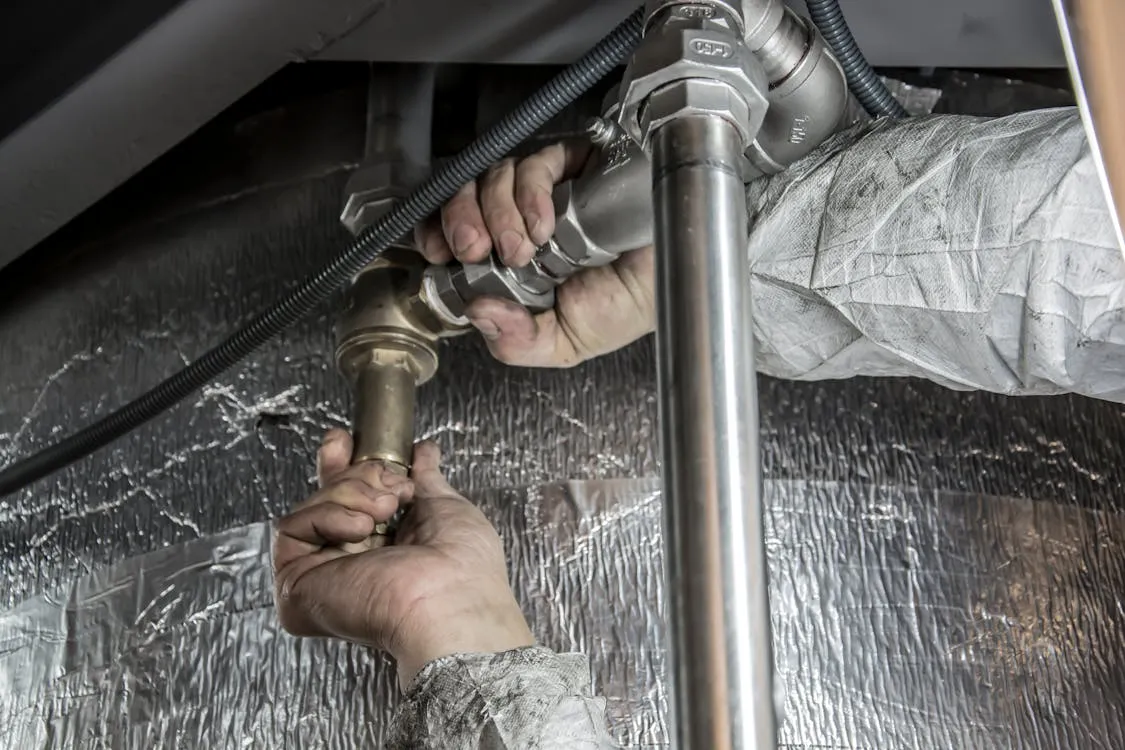
What is a garbage disposal wrench?
A garbage disposal wrench is a 1/4 inch allen wrench designed to manually rotate a jammed disposal's grinding mechanism from underneath the unit. The wrench attaches to a hex socket on the bottom center of food garbage disposals. Manufacturers include the wrench with new units to provide homeowners with a self-service unjamming tool.
How does a garbage disposal wrench work?
The garbage disposal wrench works by inserting into a hex socket on the disposal's bottom to manually rotate the grinding plate back and forth. The hex socket connects directly to the flywheel. Manual rotation breaks up jams by forcing stuck debris to shift position.
Back-and-forth motion creates leverage that a jammed motor cannot generate. Full rotation of the flywheel indicates the jam has cleared.

What size wrench does a garbage disposal use?
Most garbage disposals use a 1/4 inch allen wrench, though commercial or older models use 3/8 inch. The measurement refers to the hex socket diameter on the disposal's bottom center. Residential disposals manufactured by InSinkErator, Moen, Waste King, and KitchenAid standardize the 1/4 inch size. Homeowners can verify the correct size by checking the disposal manual or measuring the hex socket before purchasing a replacement.
Do all garbage disposals use the same wrench size?
No, most residential disposals use 1/4 inch wrenches, but commercial units and some brands use 3/8 inch or proprietary tools. Commercial disposals in restaurants and industrial kitchens typically use the larger 3/8 inch hex key due to heavier motor components. Generic 1/4 inch allen wrenches work with 85% of residential garbage disposals.
When do you need to use a garbage disposal wrench?
You need a garbage disposal wrench when the disposal hums but won't grind, indicating the grinding plate is jammed with food debris or foreign objects. The humming sound confirms the motor receives power and attempts to run. A silent disposal signals an electrical failure or tripped circuit breaker rather than a mechanical jam.
Common jam causes include bones, utensils, fibrous foods, and hardened grease buildup. Homeowners should verify the disposal reset button (red button on the bottom) has not tripped before attempting manual rotation.
Persistent jams that resist manual rotation often signal internal component damage requiring professional diagnosis. Our team of certified technicians provides expert garbage disposal repair including motor replacement, flywheel restoration, and complete unit installation.
How do you use a garbage disposal wrench?
Using a garbage disposal wrench involves gathering materials, following safety steps, and manually rotating to free the jam. The process takes 5-10 minutes for standard jams.
Materials Needed:
- 1/4 inch allen wrench (or manufacturer-included wrench)
- Flashlight (optional, for visibility under sink)
- Confirm power is off (circuit breaker switched off)
Step-by-Step Procedure:
Turn off power completely
Switch the circuit breaker to OFF or disconnect the disposal from the electrical outlet under the sink.
Locate the hex socket
Find the hex socket on the bottom center of the disposal unit.
Insert the wrench firmly
Push the 1/4 inch allen wrench into the hex socket until it seats completely.
Rotate back and forth
Push the wrench handle left, then right, repeatedly for 8-12 rotations as the jam breaks apart.
Confirm full rotation
Rotate the wrench 360 degrees in both directions without resistance to confirm the jam has cleared.
Remove wrench and restore power
Extract the allen wrench, restore power at the circuit breaker, run cold water, then turn on the disposal to test.
Is it safe to use a garbage disposal wrench?
Yes, using a garbage disposal wrench is safe when power is completely shut off at the circuit breaker and you never insert hands inside the disposal chamber. Cutting power prevents accidental startup during manual rotation. Wall switches can fail or be turned on accidentally, creating injury risk. The wrench accesses the flywheel from the external bottom socket, eliminating the need to reach into the disposal chamber from above.
What if the garbage disposal wrench won't turn?
When the garbage disposal wrench won't turn, the jam is severe, a foreign object is wedged, or internal components are broken. Severe jams require increased force applied gradually to avoid stripping the hex socket. Metal utensils, glass fragments, or large bones wedged between the grinding plate and housing prevent rotation even with maximum force.
Broken flywheel bearings or cracked grinding plates cause the wrench to turn without freeing the jam. Homeowners should stop when the hex socket shows signs of stripping or when excessive force yields no movement after 15-20 rotation attempts.
What can you use if you don't have a garbage disposal wrench?
If you don't have a garbage disposal wrench, 3 substitute tools include a standard 1/4 inch allen wrench, a hex key set, or a wooden broom handle from above. Hardware stores stock individual 1/4 inch allen wrenches for $5-7. Bicycle repair kits and furniture assembly tools often contain 1/4 inch hex keys that function identically to disposal wrenches.
The wooden broom handle method requires inserting the handle into the disposal chamber from above and pushing against the blade edges to manually rotate the grinding plate. The broom handle provides less leverage than bottom-access wrench methods.
Can you unjam a garbage disposal without a wrench?
Yes, you can unjam a garbage disposal without a wrench by using a wooden broom handle to manually rotate the blades from above with power completely off. Insert the broom handle into the disposal opening and push against the impeller blades to force rotation. Wooden utensils prevent damage to the grinding components, unlike metal tools that can chip or bend the blades. The method requires more physical effort than the wrench technique due to reduced leverage.
Drain blockages downstream from the disposal unit may require mechanical clearing tools rather than wrench rotation. For clogs that extend beyond the disposal connection, our guide on choosing the right drain snake for your clog explains which tool type matches each situation.
What are the different brands of garbage disposal wrenches?
The 3 primary garbage disposal wrench brands are InSinkErator Jam-Buster, Moen Unjamming Wrench Model 1037, and generic 1/4 inch allen wrenches. InSinkErator includes the Jam-Buster Wrench with every disposal unit, featuring a red plastic handle and 1/4 inch hex end. Moen Model 1037 wrenchettes use an L-shaped design that provides leverage in tight under-sink spaces. Generic 1/4 inch allen wrenches from hardware manufacturers like Husky, Craftsman, and Stanley work with all standard residential disposals.
Purchase Information:
Generic allen wrenches cost $5-7 at hardware stores, while branded replacement wrenches cost $10-15. InSinkErator Jam-Buster replacement wrenches sell for $12-14 through manufacturer websites. Most new garbage disposals include the manufacturer-specific wrench, making separate purchases unnecessary.
Same-day pickup options are available at Home Depot and Lowe's for generic 1/4 inch allen wrenches. Online retailers including Amazon stock branded and generic options with 2-day delivery.
Does the wrench come with a new garbage disposal?
Yes, most new garbage disposals include a manufacturer-specific wrench attached to the unit or packaged inside the installation manual. Manufacturers zip-tie the wrench to the disposal body or place it in the manual documentation pouch. Homeowners who cannot locate the included wrench can contact the manufacturer for a free replacement or purchase a generic 1/4 inch allen wrench from any hardware store.
Having the right wrench is only part of the solution when disposal problems involve connected drain line blockages. Homeowners across Long Island trust our drain cleaning in Huntington team to resolve disposal-related drain issues with same-day response.
How do you maintain your garbage disposal to prevent jams?
Preventing garbage disposal jams requires 6 maintenance practices including running cold water, avoiding fibrous foods, and monthly cleaning. Proper garbage disposal care extends unit lifespan and reduces jam frequency.
Run cold water consistently
Turn on cold water 5 seconds before starting the disposal, during operation, and for 15 seconds after turning off the unit to solidify grease.
Avoid problematic foods
Never dispose of bones, shellfish shells, fibrous vegetables, potato peels, grease, oil, pasta, or rice.
Cut items before disposal
Chop large food scraps into pieces smaller than 1 inch before feeding into the disposal.
Clean monthly
Run ice cubes with rock salt through the disposal, or use baking soda and vinegar, to scour the grinding plate.
Freshen with citrus
Grind lemon or orange peels quarterly to eliminate odors.
Inspect annually
Check for leaks around the mounting assembly and drain connections, and listen for unusual grinding sounds.
Consistent care for garbage disposal units prevents 70-80% of jams... according to 2026 research by Consumer Reports.
How long does a garbage disposal last with proper care?
A garbage disposal lasts 12-15 years with proper care, though average lifespan in practice is 11 years. Garbage disposals have an average lifespan of 12-15 years, with 11 years being typical in practice... according to the International Association of Certified Home Inspectors (InterNACHI). Usage frequency affects longevity - disposals used multiple times daily wear faster than units used once per day.
Maintenance habits including monthly cleaning and cold water flushing extend operational life beyond industry averages. Replacement indicators include frequent jams despite proper care, visible leaks, persistent odors after cleaning, and complete motor failure.
What are common mistakes when using a garbage disposal wrench?
The 4 common mistakes when using a garbage disposal wrench include leaving power on, using excessive force, forgetting to remove the wrench, and rotating in one direction only.
Leaving the disposal connected to power creates serious injury risk as the motor can start during manual rotation.
Applying too much rotational force strips the hex socket edges, preventing future wrench insertion.
Forgetting to remove the allen wrench before restoring power causes the wrench to fly out when the motor starts.
Continuous rotation in a single direction fails to break apart jams effectively; back-and-forth motion is needed.
Garbage Disposal Wrench Maintenance Extends Unit Lifespan
Knowing how to unjam and maintain your garbage disposal with the proper wrench extends unit lifespan and prevents costly replacements. The 1/4 inch allen wrench serves as an essential tool for homeowners facing jammed disposal units. Proper use requires complete power shutoff, careful hex socket insertion, and alternating back-and-forth rotation until the flywheel moves freely.
Substitute options including standard allen wrenches and wooden broom handles provide solutions when the original manufacturer wrench is unavailable. Preventive care through cold water usage, proper food selection, and monthly cleaning reduces jam frequency by 70-80%.
Wasted food represents 24% of all landfilled waste and contributes 58% of landfill methane emissions... according to 2023 research by the U.S. Environmental Protection Agency (EPA). Proper garbage disposal maintenance helps process food waste efficiently while reducing the volume sent to landfills.
Regular care extends disposal lifespan to the 12-15 year range, saving homeowners $200-400 in replacement costs. Mastering basic disposal maintenance through wrench technique and preventive practices provides long-term value and environmental benefits.
Related Articles
Ready to Get Started?
Get professional services in today. Call now for immediate assistance or get a free quote.
Professional Service
Trusted experts in your area
Quick Response
Fast and reliable service
Fully Licensed
Certified and insured professionals
Clogged drain? We're here 24/7.
Call Now